Higham Royd
Ackworth Old Hall
Old House on Church Street
Cudworth Pond
Coblers Well
The Old Police House
Bothamhall, Yorkshire and Brierley Manor Rentals
Church Street Brierley
Hanson's Blacksmiths
The Crowther family of Higham and links with Burntwood Hall
Hoyland Family in Brierley
Revised 27th. February 2010 with new information regarding the earlier building date for Brierley Hall.
Hall Farm Brierley
A possible tunnel
Ringstone Hill
George
Wilson
and Brierley Post Office.
I'm researching my family tree and have
traced an ancestor back to Brierley. I'm interested in
finding out a
bit more about Brierley and in particular the places
associated with
my ancestors.
My
great
great great grandfather was George
Wilson who
was the
postmaster in Brierley as shown on the 1861 census. His
address was Prospect
Cottage - does this
still exist? I believe his mother was called Ann and his
daughter
Annie
Wilson
(born around
1847) was my great great grandmother. The name of his
mother
is the
furthest back I have managed to trace this part of my family
tree, I
don't know what his fathers name was or what his mother's maiden name
was.
I
would be interested to hear from
anyone that knows any information about George or his family. Or
if
anyone has any photographs old or new of Prospect Cottage or the post
office.
My
on line
booklet ‘Brererley A History of
Brierley’ has references to Brierley Post office and George Wilson.
I
have had
chance to
look through my local history archives, and found these details.
William
White’s
West
Riding Trades Directory for 1838 lists a George Wilson as a shoemaker
at
There
had been a
post
office in Brierley since about 1840 when it stood close to the Three
Horse
Shoes Inn but no one by the name of
The
1861 census
has
George Wilson aged 40 as a Saddler and Post Master at Prospect Cottage
with his
wife Martha 34 daughters Ann 14 and Emily? 10, and Ann Wilson 83 born
in
Royston about 4 miles from Brierley, she was the mother of George.
George was
born in Shafton about a mile from Brierley. He must have lived in
Brierley
since 1847 or earlier as his children were born here.
The
1881 census
has
George Wilson aged 60 born in Felkirk
(Shafton) Postmaster
&
Saddler on Church St. Brierley,
with his wife Martha aged 54 born in Felkirk (Brierley).
Later
the Post
Office
was moved to Cross Hills close to the junction with
Prospect
Cottage
on
Church Street Brierley stood close to the east side of
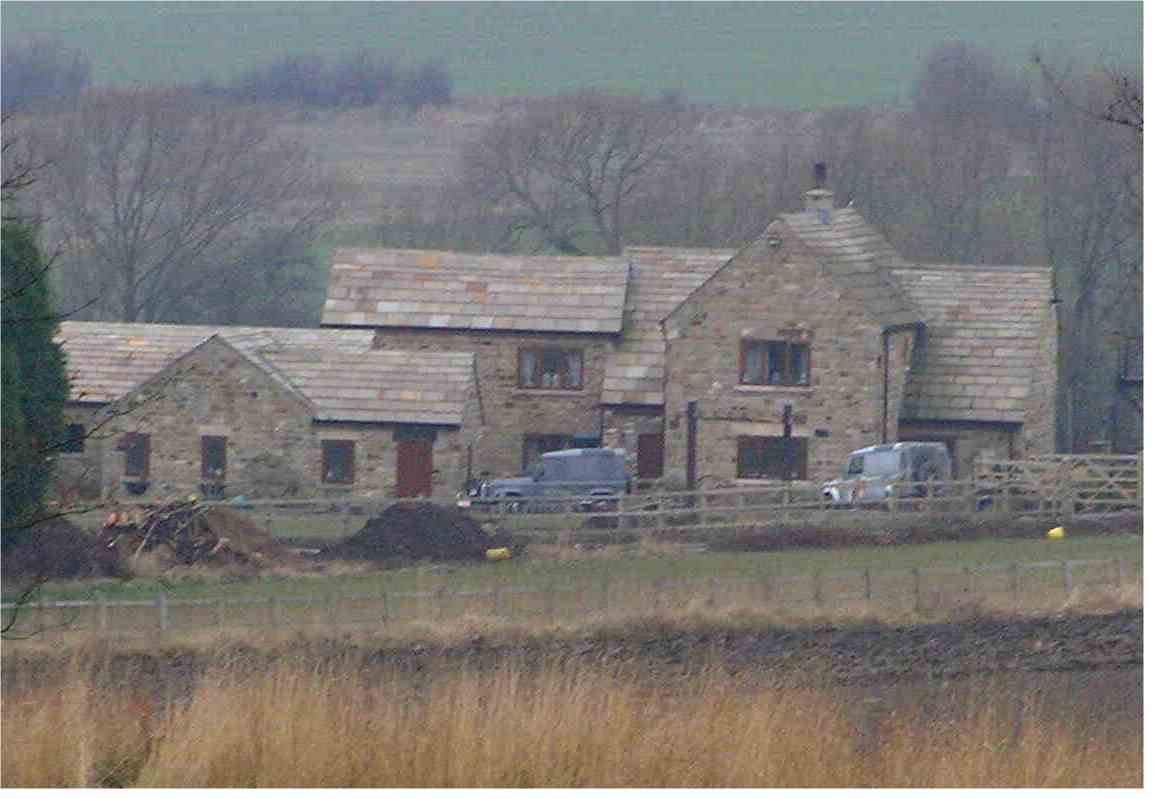
Folly Hall Brierley
Howell
House
stands in a hollow just east of
The
House
was a Grange or out lying farm belonging to Nostell Priory. The
Priory
was dissolved 20th. November 1540. Howell House went with the rest of
the
Nostell estate to Dr. Thomas Leigh and soon afterwards to Sir Thomas
Gargrave.
In
1568
Howell House passed to Thomas Normanvile. It was described as ‘A
capitol
messuage called Holewell or Hovel Hall in the parish of Thurnscoe with
a wood
of 160 acres’.
The
historian
Joseph Hunter writing in 1828/31 describes Howell House as
‘The
Grange of Holy Well or Howell with lands in Thurnscoe, Darfield, and
Houghton, together
with Howell Wood of 160 acres.’
In
1881
the house was occupied by Mary Ann Hirst also
a
widow aged 46 who was born in
Clayton and farmed 101 acres
employing 3
men. Her daughters Louisa Ann aged 11 & Geregiana aged 7 and son
George
Herbert aged 5 were born in Upper Midhope
Penistone. James Aspinall aged 26 nephew of Mary and born in Brighouse
was the Manager
of The Farm (Farm Bailiff)
Joseph
Bedford
43 born in Thurnscoe and Charles Marshall 20 born in Arksey
were farm
workers.
The
family
were still there in 1891, and Kelly’s West Riding Directory for
1893
lists Mrs. Ann Hirst as a farmer at Howell House Thurnscoe.
An
archaeological
aerial survey taken in the 1970s found traces of ancient
fields
just to the
The
building
has seen may changes it has masonry and internal timbers that
may date
from time when it was still a Grange of Nostell. The window frames
have
been
changed and a pan tile roof added probably in the last 200 years.
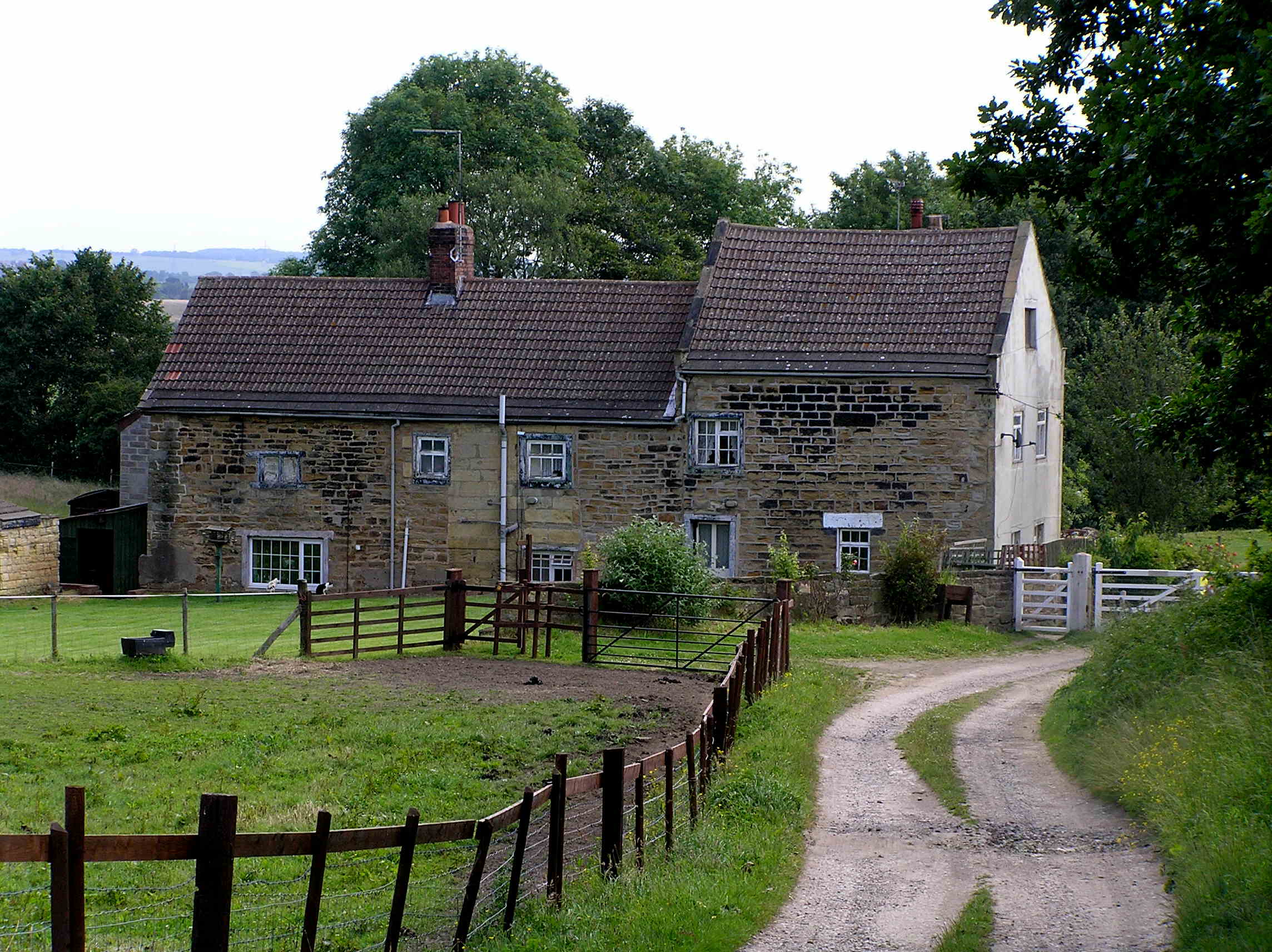
Howell Farm House
Ringstone Hill
Hello Richard,
Do
you
have
any knowledge of Ringstone Hill. South Kirkby Hill Fort is nearby.
Is
Ringstone
Hill an ancient henge type site. I see that there are some stones
there. Are
these part of a SESKU. (South Elmsall South Kirby,
Thanks,
Alan
Thank
you
for
your email Alan.
Ringstone
Hill
should not be confused with the SESKU folly near the household
waste site
on
You
will
find
a write up of the known history of the Iron age fort in South
Kirby and
Ringstone Hill on my web site in
the
first chapter of my on line
booklet Brererley a history of Brierley.
Regards
Richard
Hello
Richard,
Thank
you
for
the reply. It has cleared up that question. I've looked at your
interesting
well researched site. I went to your links page and found Barnsley
Family
History Society, which I hope may assist in my family research.
Alan formerly of
A possible tunnel
Hi
Richard
My
name is Gary Keele, I was born in Brierley (Hillside
Cres.) 1969 left
in 1994, When I was younger I was told of a possible tunnel from
Cordeux corner
to Brierley Common. Is the this true? In the wall as you walk up from
Thank
you
for your
email
The
blocked
entrance in the old stone wall was
the Cobblers Well it was closed for safety about 50 years ago.
Regards
Richard
Hall Farm Brierley
This
was
written in answer to an email regarding Percy Townend of Hall Farm
Brierley.
Percy was Born in Hemsworth in 1890 and moved to Hall Farm Brierley
c1927. He
retired to live at Hemsworth Grove Farm in 1957. Hall Farm then became
the home of the Baxendale family.
James
Townend the grandfather of Percy was born in
In
Kelly’s
1893 West Riding of York Directory
James
H. M. Townend & Richard Townend are listed as butchers in
Hemsworth.
Richard was also assistant registrar to Hemsworth Rural District
Council. He
had spent some time a teacher in a private school in the
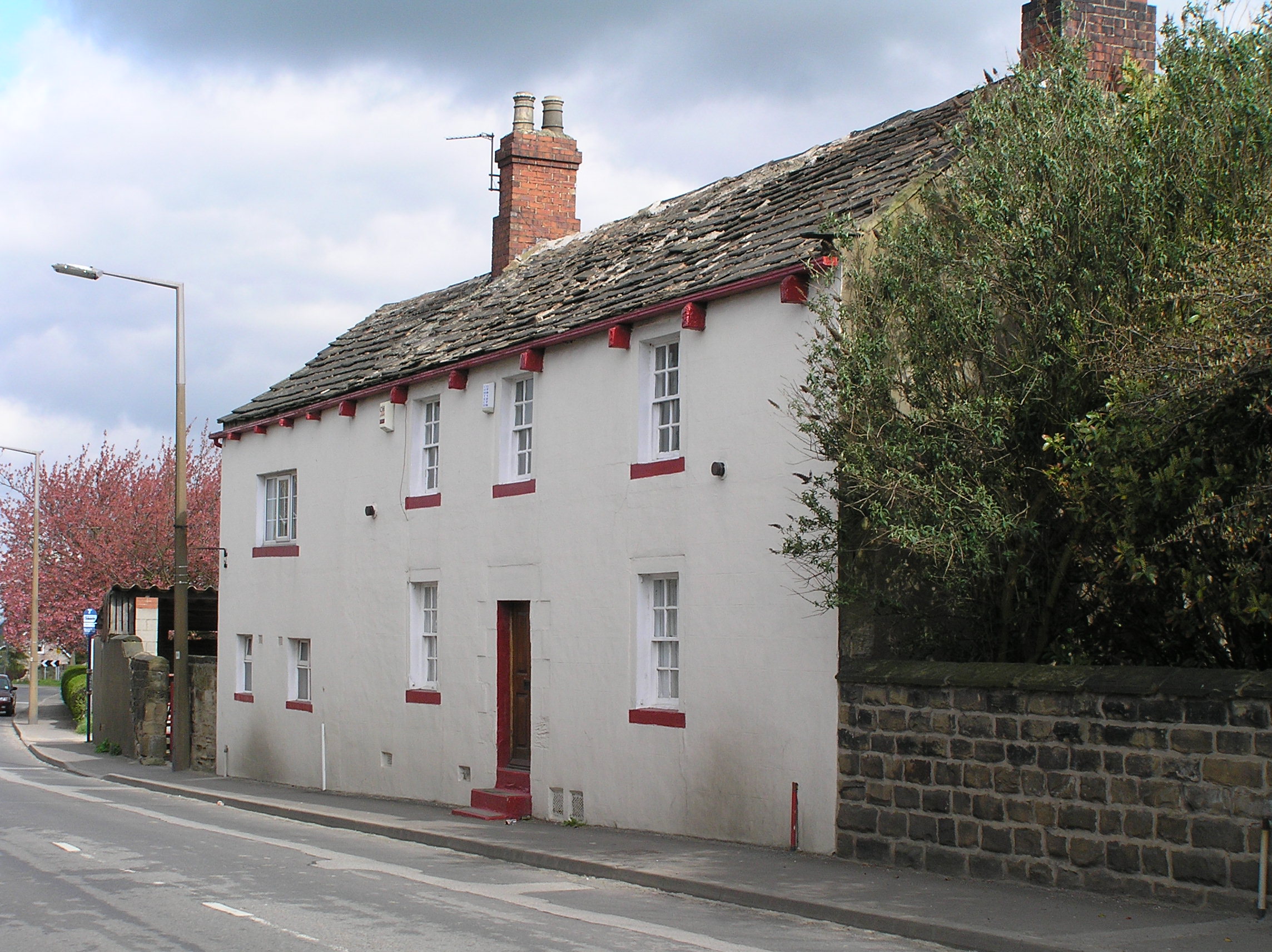
I
have been
fortunate to see some documents relating to the Hoyland, of Brierley
dated 1925 when the family had left the area. This prompted me to
publish this short history.
In
1662
John Hoyland paid £5 rent to Brierley manor for Speight farm in
the
village, in
1701and 1720 a John Hoyland paid quite high rents of £40 to the
manor.
Then in his will dated 20th. May 1731 John Hoyland wrote of his own
house in which he now lived at Brierley. This had orchards and
gardens, and is the first mention of the
building that was to become known to us a
Brierley Hall
1806
Militia
list has no Hoyland’s eligible for service recorded in Brierley
1841
census
has John Hoyland aged 45 of independent means , Mary his wife
45, and his son John 9 at the mansion later
to
become known as BrierleyHall. This had been the name of Lindley
house up to
about
1850.
Robert
Holand
aged 44 a solicitor, Elizabeth 39 his wife were at Lindley
House Brierley.
They
were
also in the 1838 Directory and the 1840 tithe survey
1851
Census
has John Hoyland Gentleman 57 born in Felkirk parish which
includes
Brierley, Mary his wife 57 born in Sheffield, John Hoyland 19 born in
Felkirk
now a student at Oxford at Brierley Hall.
Robert
Hoyland
54 attorney & solicitor born
in Felkir k
Elizabeth
his
wife 49 born in
1860
Rev.
John Hoyland of Brierley was inducted as Vicar of Felkirk
1861
Census
John Hoyland Gentleman 67 born in Felkirk, Mary his wife 69 born
in
Robert
Hoyland
64 attorney & solicitor born
in Brierley widower,
Sarah
his
daughter 31 born in Brierley now the wife of Rev.
G.P.
Cordeux, Mary F E Cordeux daughter
2 born in Cheltenham Gloucestershire
visiting at Lindley House
Rev.
John
Hoyland Vicar of Felkirk 29 born in Brierley, Mary Ann Hirst 29
born in
1869
John,
Robert, Rev. John Hoyland, and Rev.
G.P. Cordeux
are on the
1871
Census
has John Hoyland Landowner 77 born in Felkirk widower. Ann
Stacey inlaw
70 spinster born in
Robert
Hoyland
74 attorney & solicitor born
in Brierley widower
Sarah
his
daughter 41 born in Brierley now the wife of
Rev.
G.P.
Cordeux, 42 born in
Edith
M
Cordeux daughter 8 born in Brierley
Edith lived in the village for many years some older residents still
remember her. She founded the Church Insitute on Church Street which
is
now a working mans club.
Robert
H
Cordeux son 6 born in Brierley
Edward
H
Cordeux son 5 born in Brierley all at Lindley House.
Rev.
John
Hoyland 39 Vicar of Felkirk and landowner
Mary
Ann
Hoyland wife 38 born in
1874
Rev.
John Hoyland retired as vicar of Felkirk
1881
Census
at Brierley Hall
John
Hoyland
aged 49
Born in Felkirk, Clergyman Without
Care Of Souls M.A.Oxford
Mary
Ann his wife 48
Felkirk, and his two children at home both scholars Fanny I. 10 Felkirk.
John
Henry 9
Felkirk, the other children Alice and
Clare Hoyland are
listed at a
At
Lindley
House Brierley
Godfrey
P.
Cordeux 52 Born in
Sarah
his
wife 51 Felkirk, and
child,
Edith 18 Felkirk,
Anne Stacey an aunt aged 81 born in
1891
Census
has Alice, Clare, and Fanny
Hoyland living alone at Brierley Hall
Godfey
P.
Cordeux with his wife Sarah at Lindley House.
By this time Clement Edward Hoyland had become a mining engineer an
was
visiting friends in Doncaster on the day of the 1891
census.
1893
Directory
has Rev. John Hoyland at
Brierley
Hall.
1901
Census
has Rev. John Hoyland with his wife Mary born in Barnsley,
Godfrey
P.
Cordeux was retired and living alone at Lindley House
1903
Clement
E. Hoyland bought land at Brierley Gap to build a home. This is
now the
Robin Hood night club.
A
Gap is a crossing point on a watershed, In this case it is between the
rivers Don
and Calder valleys.
Rev.
John
Hoyland is in the 1908 directory at Brierley Hall
Rev.
John
Hoyland died in 1910, his wife Mary and
daughter Alice moved to live in a house overlooking the Stray
at Harrrogate. Clement Edward and his
wife Louse Eddie Hoyland were
staying at The Grange Hotel, Grange Over
Sands, Lancashire on the day of the 1911
census. Having
sold his house
at Brierley Gap he was listed as being of independent means.
Brierley
Gap was
purchased by Hemsworth RDC, and other Hoyland land in Brierley went
to the Cordeux family.
By
1912
Alfonso Wood is listed a living at Brierley
Hall.
1925
Clement
E. Hoyland is listed as the owner occupier of Brinkworth Hall,
Elvington York, probably at the time of his sale of the property.
For more on the history of
Brierley
Hall please see the 'People of Brierley' page in my on
line booklet
'Brereley a history of Brierley'
Higham Royd
Dear
Richard,
I
have recently
researched my family history as far back as a George Holland who, in
the 1881
census, lists his birthplace as Higham Royd circa 1838. I would be
greatly
interested to learn if any reference to this surname exists in
local
records and would certainly appreciate any pointers which may aid my
further
research.
Yours
sincerely
Paul
Holland
Hello
Paul
If you
go to this web site http://www.old-maps.co.uk/ and
search
for Higham, then select the one in
Regards
Richard
Thank
you
Paul
Holland
Ackworth Old Hall
Hello
Richard,
My name is Bonnie Watson-Padgett.
My husband and I with friends went to
Thanks, Bonnie Padgett Clarksville
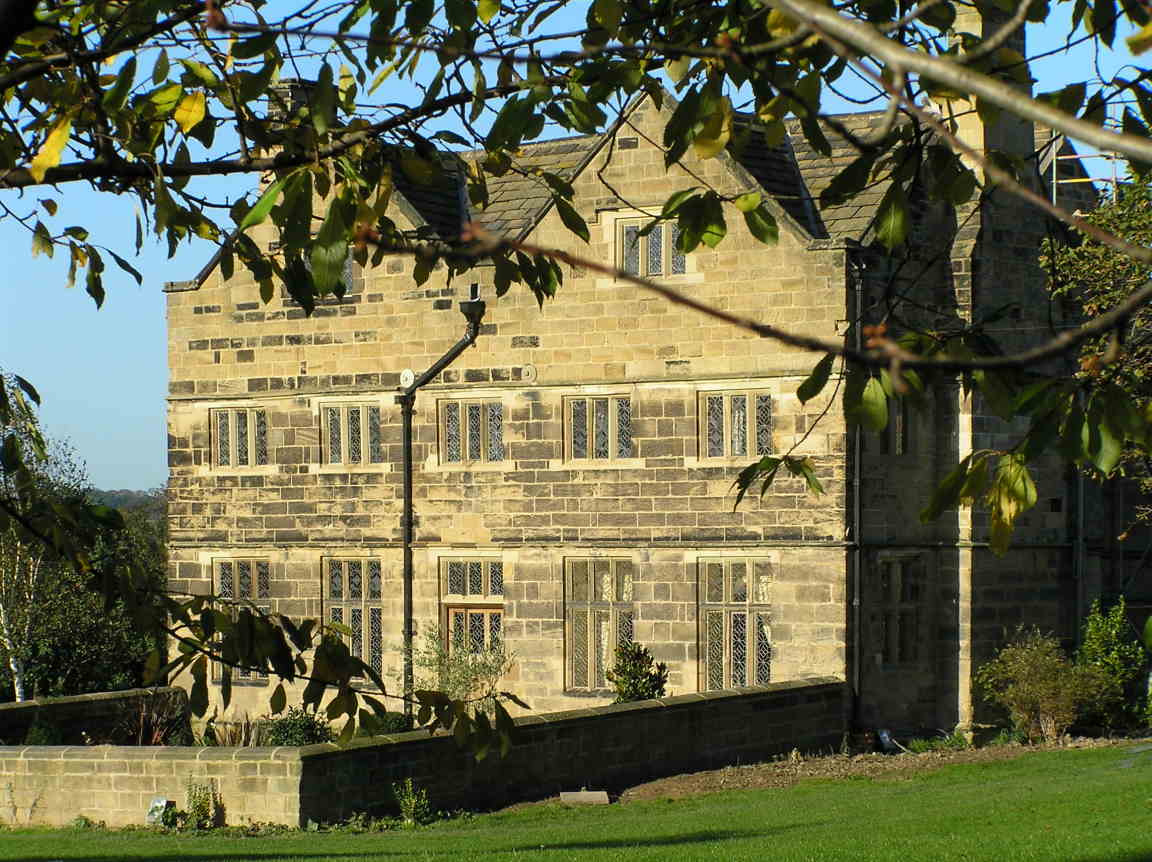
Ackworth Old Hall
Hello
Bonnie
Than you for your email. Yes I know Ackworth Old Hall it is about 7
miles from
my home.It is an Elizabethan Hall built about
1580. In
1715 it was occupied by Rev. M. Lee and in 1893 by a farmer called
John
Waites.
I Could not comment on its being haunted that is out of my field.
Ackworth Old Hall is to the west of the Church on Purston Lane B6421,
it is marked on some maps as just 'Hall'.
Regards
Richard
Hello
Richard,
Thank you so much for the information and picture. It has been a
lot of
help. If you know the Watson's that own Ackworth Hall now,
please, tell
them hello from the Tennessee Watson's( maiden name) they met in
Bonnie Padgett
Hi
Richard
I
have taken a few photographs of the old house on
Regards
Hello
Yes
it
was a good house shame it had to go. A Miss. Watson
lived there for some time. It was built about 1930. The 1919 Ordnance
Survey
map does not show it, but the 1938 one has the house marked. Hope this
is
useful.
Regards
Richard
Hi
Richard
Thank
you
Hello
Richard
Reflecting
on my early days in Cudworth a question popped into my head the other
day: why
was that space in the centre of the village referred to as the "pond"
is it a corruption of pound (of the livestock-containing sort) or
was there a
pond there? Something else that I need to look into, for purposes of
thoroughness, is the origins of the village. Whereas many of the
villages round
about seem to have arisen due to the discovery of coal, Cudworth, I
suspect,
had a longer (if undistinguished) history? But even that is a
questionable statement.
Did Grimethorpe exist before the pit-head? Come to think of it, it
probably
did. The coal owners would develop their pits around a source of
labour
an
existing village - and if the coal is down there anyway, it did not
matter
where the shaft was dug, did it? Then, as the need for labour grew,
the
so the
village expanded. Am I correct?
Mike
Hello
Mike
Cudworth
takes its name from an Anglo-Saxon settler 'Cuda 's enclosure' it was
in
Anglian Northumbria (Yorkshire & Northumberland) close to Saxon
Mercia
(midland counties), worth is a Saxon place ending. The river Don was
the
accepted boundary. Grimethorpe was a Viking/Norse setlement or Grimr's
Thorpe
on the edge of Anglo-Saxon Brierley, it never grew to more than
a
few
farms as the area became part of Brierley Manor
regards
Richard
Mike
Coblers Well
Hi Richard, we have not lived in Brierley long. We are really eager to find photo’s of the well we have bricked up in our front wall on Church Street opposite the Farriers Arms, and any information about it. The plot of land our house was built on was known as Jennet Croft. There are two dwellings and a joiners shop marked on an early plan of the site.
Kind
Regards
Gareth
&
Deborah
Hello
Gareth
& Deborah
Thank
you
for
your email.
The
Tithe
Award
Survey 1840 shows Jennet Croft as one acre of arable land owned
by John
Hoyland of Brierley Hall Church St. Brierley, and farmed by John
Wilkinson of
Grimethorpe. His farm house was close to what is now
The
wells which had
served the villages for centuries were inadequate
for
the increasing population following the opening of Grimethopre
Colliery. Hemsworth R.D.C.
built a reservoir at Ringstone Hill to supply
Brierley
and Grimethorpe with piped water for the first time in their history.
What a
change this would have been for the older residents.
Regards
Richard
The Old Police House
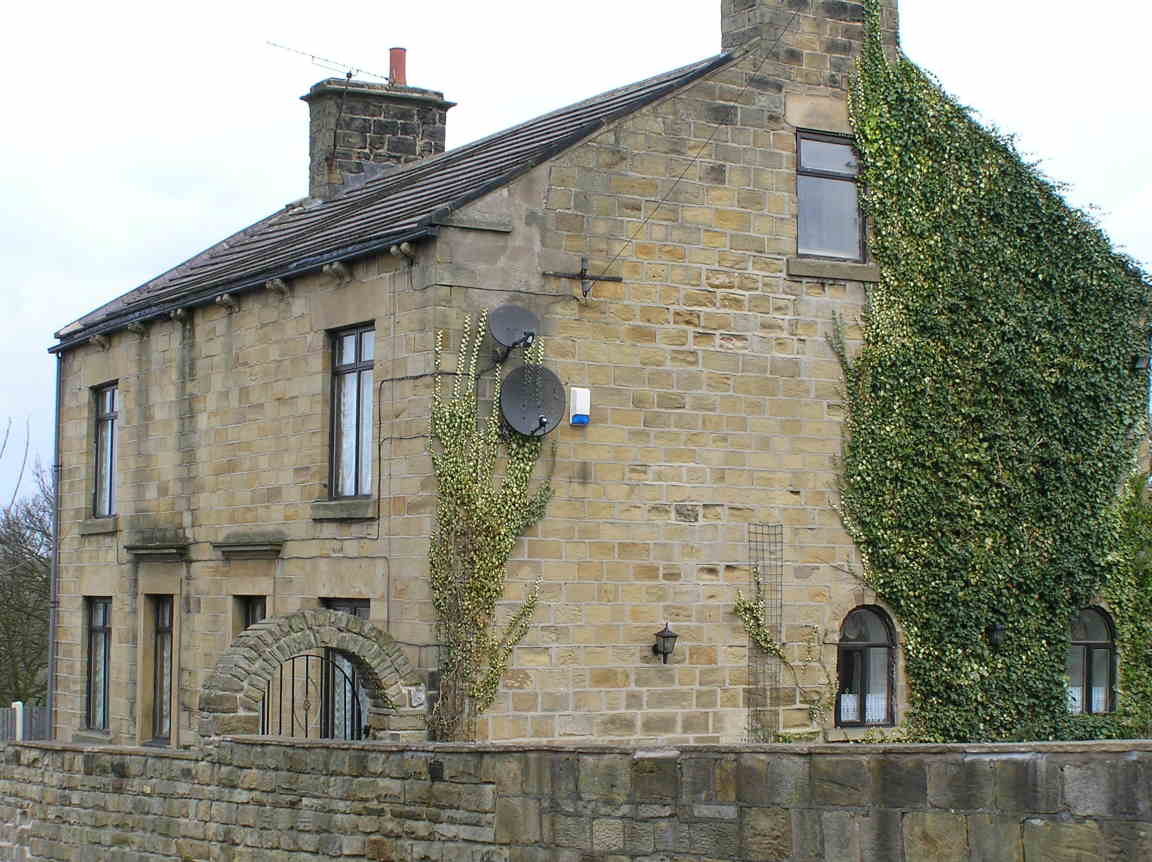
This was written in answer to a question from a visitor to my home.
The
1840
tithe award for Brierley was a complete survey of the village with
every
plot of land accounted for. Plot 169 was Pit Hill field, this
was
three quarters of an acre of land owned
by
William
Attee’s heir and farmed by Benjamin Bedford in 1840. The
pair of
Houses in the photo above were built on this plot in 1851.
One of
these was the home in
1852 of William
Watson who was born in Brierley in 1801, he had lived in Monk Bretton
and
Cawthorne where his eldest child was born in 1838. He was the part
owner of
Proctor & Watson’s White House coal mine at Barnsley Road Shafton.
This is now a
kennels that stands back from the road.
It was known as the Police Station by 1871 when
James Barritt of Skipton was the sergeant. In 1881 Thomas
Horne aged 37 born in Eversley,
The
other house
was the home of Thomas Rogerson a stone mason and the builder of the
houses. Charles
Rogerson the son of Thomas also a Stone Mason who
had
lived in
Liverpool for a while, occupied this house with his wife Sarah,
and
children Anne & Charles, from about
1881
to 1891
Edward
Watson is
the next known occupier he was
a Haulage Contractor based there in
1927. The Watson family lived there for some time and used the land as
a coal
and wood yard. These houses are now 24 &
The
pair of
houses are not on the 1849 Ordnance
Survey 6” map but were built quite soon after the survey. They are
shown on
the 1893
edition. They are well built in stone and are quite up market in a
Victorian
style.
Providence
Terrace now gone was at what were Nos. 33-35-39 Barnsley Road. No. 35
was the
Police
Sergeants’ house, Joseph Little
from Stourbridge was the sergeant here in 1861. Much
later
Dear
Richard
Have
you
ever
heard of Bothamhall,
All the best and thank you in advance for any information you may
have
of interest or in any direction you can point me? This
grandparent's son
was an extraordinary man who aged 51 in 1823, he left his life as
a
cloth
merchant and manufacturer in Leeds and went with his family
(except one
son) to
the 'wilderness' of Maine, USA where he had bought acres of land
with
two
others when he was 26 and he created a settlement which is now
known as
The
Rangeley Lake Region.
Jane
Rangeley
----------
Dear
Jane
I
have
located Botham Hall it is a in a district of Huddersfield called
Golcar
about 4
miles west of the town centre. A. H. Smiths 'West Riding Place
Names'
lists
Bothomhall in
I
have just been looking at a
Would
you
mind
if I placed an edited copy of these emails on the Ask Richard web
page,
and on the Ask Richard about Brierley
Hope
this
is
useful to you
Regards
Richard
-----
Dear Richard
Thank
you
for
this and your previous email. You are most kind. Please
feel
free to put something on your website about our exchange. Could you
kindly
email me when it is up and send me the link? I have now
sent off to the records office for a copy of the document in which
Rangley and
Sykes are mentioned.
With
grateful
thanks
Jane
Rangeley
I
have had
the privilege to examine a set of
deeds relating to Church Street Brierley opposite the Church and
Old
School. which have helped me to have a clearer
picture of the lay out of that part of the village.
In
1806
William Watson then aged 19 was an
apprentice blacksmith in Brierley. There were two blacksmiths in
the
village at
that time, Thomas Bedford and William Schooley. In 1838 when
William
Watson was
listed as Victualler and Blacksmith in Brierley.
In
1852 the Watson family held the Farriers
Arms Inn and again in 1877 a William Watson was listed as a
blacksmith,
and
another as an Inn Keeper at The Farriers Arms. Farrier is another
name
for a
blacksmith especially one working with horses.
By
1881 the
Watson family had a shop and
blacksmiths on
The
deeds
show quite well the relationship of
Watson’s blacksmith’s shop to the village Pinfold and Towns Houses
for
the
Poor. In 1964 the ownership of the Towns Houses needed to be
verified
by the
declaration of two Brierley residents of long standing.
The lay out of this part of
No.
66
which is a general dealers, and 64 were part of plot 25 on the
tithe
award
map of 1840 they were then owned by William Watson Blacksmith.
This
plot ran
back off
No
62
is on the site of the Pinfold. This was anciently in the care of
the
Pindar
who impounded stray animals in the village and made a charge to
the
owners for
their return. On a Brierley Manor court roll dated 1655 Richard
Mann
was listed
as Pindar for the village.
60
&
58 are on plot 24 of the tithe award map of 1840. This was the
site of
the Towns Houses, these were two cottages in the care of the
Overseers
to the
Poor. It was owned by the George Savile Foljambe. They were
demolished
in 1948.
The
Pinfold
and Towns Houses are marked on
several 19th. century maps of the village.
A
well
remembered blacksmiths in Brierley was
that of the Hanson family. William Hanson and his father George
from
Hemsworth
took over the blackmiths shop of Joseph Askin which stood on
Hanson's
Blacksmiths
Regards
Paul
Hanson
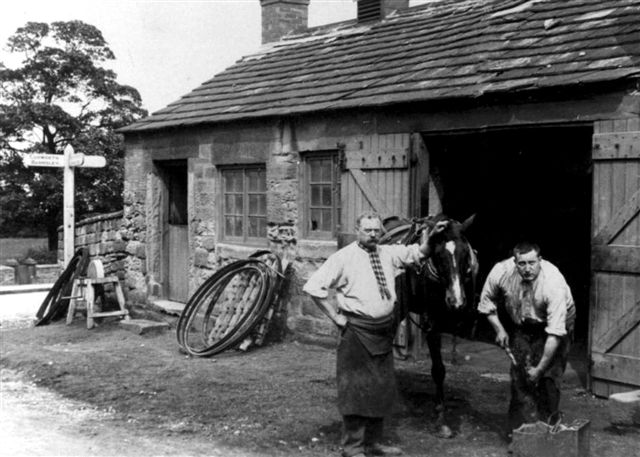
Hanson's Blacksmith's which stood at the end of Church Street
Brierley
opposite the Three Horse Shoes Inn.
George and Charles Hanson are seen at their work about 1910. The
area
is now a strip of land covered by bushes. This photo was kindly
given
to me by Mr. Donald Hanson of Scunthorpe.
Here
is
an extract from some notes of mine on the family.
"A
well
remembered
blacksmiths in Brierley was that of the Hanson family. William
Hanson
and his
father George from Hemsworth took over the blackmiths shop of
Joseph
Askin
which stood on
Regards
Richard
Hi
Richard,
Regards
Paul
Hanson
Hello
Paul
Yes
I
believe that George born 1858 was the a
blacksmith in Brierley in 1908. Charles Hanson was the last
Blacksmith
he was
working in Brierley in 1922 and possibly in 1927. The smithy had
closed
by
1936. The family first appear in Brierley in White’s West Riding
Directory for
1852. Just checked Kirk Smeaton but have not found a
Hanson or Kenyon listed.The
Kenyon family were well known in Brierley here is some of their
early
history. They
are first mentioned on the Staincross Mitilia List for 1806. The
Militia listed
records of all men able to serve in the West Riding of Yorkshire
Militia at the
time of an expected invasion by
William
White’s Directory of the West Riding
1838 has this entry for Brierley; Mathew Kenyon and Sons,
Gardeners.
The
1840
Brierley Tithe award lists Mathew Kenyon as a tenant of the Lord
of the
Manor, George Savile Foljambe, his cottage was on
White’s
West
Riding Directory for 1852 lists George
& William Kenyon as (Market) Gardeners. In 1861
John
Kenyon
who was born in Brierley is
listed as Farmer & Gardener living at Red House 1n 1881.
Regards
Richard
Hi
Richard,
The Crowther family of Higham
and
links with Burntwood Hall
Dear
Richard
I
have a
piece of writing by one of my ancestors Polly Crowther, it is a scrap of paper on which Polly has
written
several nursery rhymes, and the addresses of friends and
relations. At
one
point on the paper she writes "Composition by Miss P. Crowther,
Higham,
Barnsley" (the Crowthers lived at Higham Farm), She has also
written
her
address as Miss Crowther, T (or J) Dymond Esq., Burntwood Hall,
Brierley,
Kind
regards,
Christine
Holgate
It
is
probably T. (Thomas) Dymond on the letter you have, he owned
Burnwood from about 1868
and died in 1900.
Is
this your
family
please?
1881
census
Higham William Crowther
widower aged 83. Handicap:
Blind Farmer Of 120 Acres born in Barugh to the west
of
Barnsley
Joe
38 Crowther born in Barugh
Famers
Son Mary 36 Crowther born in
Jane 11 born in Higham granddaughter
Scholar Mary 8 born in Higham
granddaughter Scholar
Timothy
6
born in Higham grandson
Scholar William
3 born in Higham grandson
Emily 1 born in
Higham granddaughter John
Smith 19 born in Higham Farm Servant
(Indoor)
George
Hirst
55 born in Higham Farm Servant
(Indoor)
Ann
Hinchliffe 46 born in Higham Farm
Servant (Indoor)
There
is
also an entry in the Kelly’s West Riding Directory for 1893; Joe
Crowther
farmer at Higham.
As
Polly
can be a nickname for Mary I take Mary aged 8 to be your Polly
Crowther.
If so she was of the right age to have visited Burntwood as a
friend of
Catherine Dymond at the time Beatrice Tomasson was governess at
the
hall
c1890-1901. Please see my web page Beatrice Tomasson & Dymond
Family on my
Brierley Yorkshire
Regards
Richard
Many
thanks
for
all your kind help. I have only just looked at my emails - Jane
Crowther
was my Great Grandmother, and I already had the census details for
1881, but
did not realise that Polly was a nickname for Mary - this has
solved
the
mystery of who Polly was in the piece of writing that I have from
my
grandmother. I also did not know that William had the handicap
"blind" on the census - my grandmother used to say that Willie was
blinded by the tail of a horse lashing at him - the family bred
horses.
I will
pursue this further in Barnsley Archives. Thank you very much.
Kind
regards,
Christine
Pleased
to
be
able to help Christine. I have learned more about life at
Burntwood
Hall from our exchange of information. May I put an edited form of
these emails
on the Ask Richard web page please?
Regards
Richard
Yes,
you
may.
The story that my grandmother told about the family was that her
mother,
Jane had come from quite a wealthy family, but had married beneath
herself and
had been disowned by the family (she married John William Gill, a
farm
servant
at Biggin Low Green, Harewood) . I started to doubt her story
rather,
when I
found that Jane had lived at Higham Farm, rather than "Higham Old
Hall" as my Grandmother had called it. I also found that before
she was
married, Jane had worked as a house maid at Leathley Hall. This is
why
I
thought that "Polly", or someone else from Jane's family was
employed
as a servant at Burntwood. Your theory gives credence to idea that
the
Crowthers
indeed thought that they were a cut above other people. I was
intrigued
by the
fact that "Polly" seemed quite well educated (she has good
handwriting), and was also puzzled by the fact that there were no
Pollys living
at Higham as far as I could see. The Crowthers have an entry in an
1838
Trades
Directory for their farm at Higham as well.
Poor
Jane
Crowther
ended up living in very sad circumstances. Her husband died
when he
was 33 of diphtheria, and two of her children died at the same
time.
She was
pregnant at the time with my great uncle Fred (who died when he
was
only 26),
and had a four year old daughter (my grandmother Kate) to look
after.
She had
to move from their house to more basic accommodation in Nidd
Vale
Terrace,
and take in washing to survive. She always told my grandmother not
to
have
anything to do with the other children on the street, because she
came
from a
better class of family. Jane died just before my father and his
twin
brother
went to school in 1930. She would have been 60 when she died.
Incidentally,
my
mother has just told me a story about William Crowther. For quite
a
while my
father had a chair that had belonged to William, which had
scorch
marks on
one side. This was where William had placed it too close to
the
fire because
he could not see where he was putting it.
Thanks
again,
Best
wishes,
Christine
My
interest has
always been in how history has
shaped the landscape so I like to visit places I have researched.
At
the
weekend I had a chance to visit Higham. It is quite near my home
at
Brierley.
Thomas
Jefferys
1775 map of
The
M1
motorway runs very close to this farm. Pog Well lane goes from the
farm
to
‘Higham Bottom’ about 600 yards away. In 1854 this was ‘New
Sikstone
Coal
Mine’. Not surprisingly there were many coal miners living in
Higham at
that
time. The 120 acre farm of Willaim Crowther was quite large.
Brierley
Manor
farm had 180 acres and the farm that my Watson family rented at
Cudworth had 80
acres. As horse breeders and dealers the family would have many
contacts
in
Finding
Pog Well
and
Centre
on
Higham
then go to 'enlarged view'. The farm is on Royd Lane, a foot
path is
marked crossing the map from a ford on the left, this turns north
just
short of
Pog Well and leads directly to the farm house which is on the
north
side of
Royd Lane.
The
c1800
stone
farm house has its gable end next to the lane and faces west, It
appears
to have a garden on the east side. The older building which could
be an
earlier
house comes next in the same line of building. All of this
site is
part of
the farm complex.
Hope
this
is
clear
Richard
Yes,
I've
found
it. Higham is bigger than I thought it would be, and I'm not sure
I would
have been able to locate the farm without your help. The colliery
and
Pog Well
were very clearly marked. Were you able to see evidence of either
when
you
visited Higham?
Best
wishes,
Christine
Pleased
to
be
able to help Christine.
The
Silkstone
area is well within my range for days out so I know it quite
well.
The shallower coal mines near Higham such as Silkstone
New
Colliery
were phased out as deeper coal mines to the east of
If
you
know
where to look there are remains of inclined plane railways and
tramways
leading
to
The land
between
the M1 and Pog Well, which was crossed by the footpath on the
1854 map,
is now a playing field with goal posts and a small changing room
close
to the
farm. It is several feet below the level of
Higham
is
on
the western boundary of
regards
Richard
Thanks
for
the
information. I have just been looking into the history of Leathley
Hall,
and have found that it is possible that when my Great Grandmother
was
living
there it was owned by a descendant of Guy Fawkes' cousin. I need
to
look into
this further though.
Best
wishes,
Christine
Thank
you
Christine
I
have
found working on this project very interesting.
Regards